Persistent tooth pain
Pain that does not go away or appears spontaneously may indicate inflammation of the tooth nerve.
Safe and effective treatment for saving teeth affected by deep cavities, inflammation or infection. At Pasindora Clinic, we use modern technology and precise protocols to remove infection, reduce pain and preserve the natural tooth for as long as possible.
Endodontics is the branch of dentistry that focuses on treating the inside of the tooth, when the nerve or tissues inside the root canal are affected by deep cavities, inflammation or infection.
Root canal treatment is designed to remove the infection, clean and seal the tooth canals, so the natural tooth can be preserved and continue to function.
Helps save teeth affected by deep cavities, dental pain or infection.
Removes the affected tissue from inside the tooth and reduces the risk of the infection spreading.
Allows the natural tooth to be preserved, avoiding extraction when treatment is possible.
Root canal treatment may be needed when the dental pulp, the tissue inside the tooth, is affected by deep cavities, trauma, inflammation or infection.
Sometimes the pain is strong and constant, while in other cases the problem develops slowly, without obvious symptoms. This is why a dental evaluation is essential for choosing the right treatment.
Pain that does not go away or appears spontaneously may indicate inflammation of the tooth nerve.
Intense or long-lasting sensitivity may be a sign that the dental pulp is affected.
An untreated cavity can reach close to the nerve and may require endodontic treatment.
Swelling, pressure or pain when biting may indicate an infection that should be treated promptly.
Endodontic treatment is carried out in precise stages, with the aim of removing the infection, cleaning the tooth canals and preserving the natural tooth for as long as possible.
The dentist evaluates the pain, the condition of the tooth and the level of damage to decide whether root canal treatment is the right solution.
The area is numbed so the procedure is as comfortable as possible and the treatment can be carried out safely.
The affected tissue is removed, and the tooth canals are carefully cleaned and disinfected.
The canals are filled and sealed to help prevent reinfection and protect the tooth in the long term.
Root canal treatment does not mean removing the tooth. It means cleaning the inside of the tooth to eliminate infection and preserve its function.
After the endodontic treatment is completed, the tooth is cleaned, disinfected and sealed. Depending on how much of the tooth structure has been affected, the dentist may recommend a coronal reconstruction or a dental crown for long-term protection.
The goal is for the treated tooth to remain functional, stable and protected during chewing. This is why root canal treatment is only one part of the complete plan for saving the tooth.
Mild sensitivity may appear after treatment, especially when biting, but this usually decreases gradually.
If the tooth has lost a significant amount of structure, it may need to be rebuilt to restore its shape and function.
For weakened teeth, a dental crown can help protect the tooth and reduce the risk of fracture.
The dentist may recommend routine check-ups to monitor healing and the stability of the treated tooth.
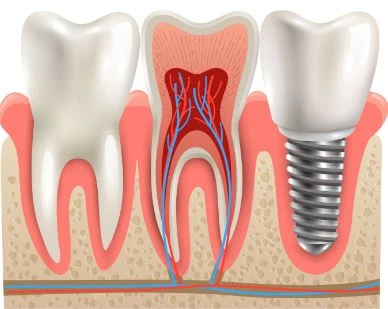
Root canal treatment requires attention, precision and the right plan for each case. At Pasindora Clinic, our approach is focused on saving the natural tooth, reducing discomfort and protecting long-term oral health.
We evaluate the condition of the tooth, the symptoms and the level of infection before recommending the right treatment.
The aim is to remove the affected tissue and preserve as much of the natural tooth structure as possible.
The procedure is carried out under local anaesthesia, so the treatment is as comfortable as possible for the patient.
After root canal treatment, the dentist recommends the right solution for rebuilding and protecting the tooth.
When the infection is treated in time, the tooth can be saved and included in a stable restoration plan. This is why it is important not to delay your consultation if you have pain, sensitivity or signs of dental infection.
If you have dental pain, sensitivity or you have been advised to have root canal treatment, it is normal to have questions. Below you can find clear answers to the most common concerns.
Root canal treatment is carried out under local anaesthesia, so the procedure is as comfortable as possible. In cases with advanced infection or inflammation, there may be slight discomfort, but the dentist adapts the treatment for the patient’s safety.
The duration depends on the complexity of the case, the number of canals and the condition of the tooth. Some treatments can be completed in a single appointment, while more complex cases may require several visits.
Root canal treatment is needed when the tooth nerve is affected by deep cavities, trauma, inflammation or infection. The aim is to remove the infection and save the natural tooth.
In many cases, yes. If the tooth can be restored correctly after endodontic treatment, root canal treatment can help preserve the natural tooth and avoid extraction.
After treatment, the tooth is sealed and may need reconstruction or a dental crown, depending on how much tooth structure has been affected. The dentist will recommend the right solution for long-term protection.
It is not recommended to delay the consultation. Sometimes the pain may temporarily decrease, but the infection can continue to progress. An early evaluation can help prevent complications and improve the chances of saving the tooth.
The exact recommendation is established only after a consultation, clinical examination and, if needed, imaging investigations. Every endodontic case is different.
A timely consultation can make the difference between saving the natural tooth and losing it. At Pasindora Clinic, we carefully evaluate each case and recommend the right solution to remove the infection, reduce pain and protect the tooth in the long term.
Even if the pain temporarily decreases, the infection may continue to progress. A dental check-up helps establish the correct treatment before the problem becomes more complex.