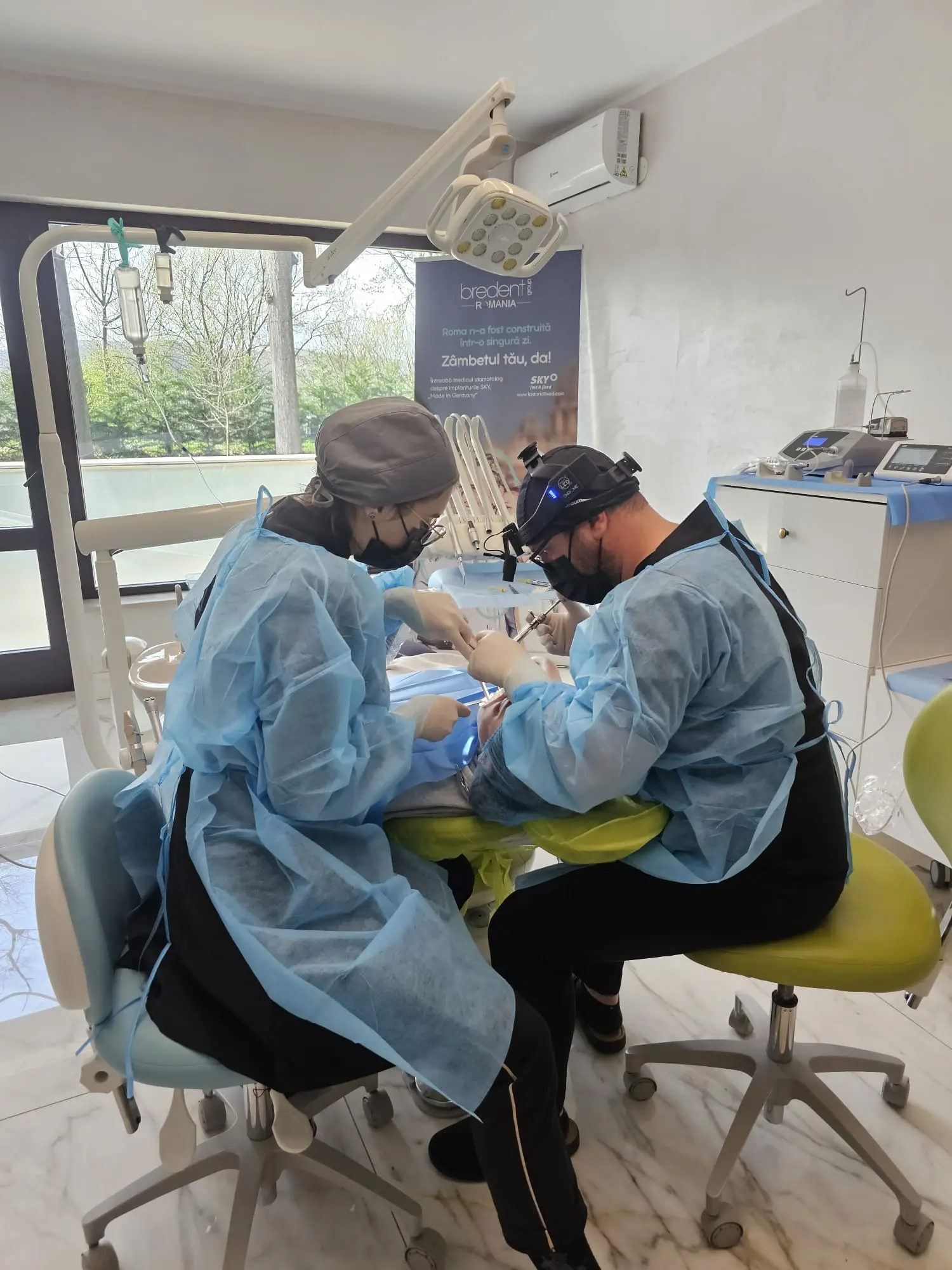
Oral surgery at Clinica Pasindora in Râmnicu Vâlcea
Oral surgery

Oral surgery in Râmnicu Vâlcea

Dental surgical treatments carried out with care, safety and comfort, for complex oral health conditions. At Clinica Pasindora, we assess every case individually and choose the right solution for your oral health.

Dental surgical treatment

What is oral surgery?

Oral surgery is the branch of dentistry that focuses on diagnosing and surgically treating dental conditions, lesions and problems that cannot be solved through standard dental treatments.

At Clinica Pasindora, oral surgery procedures are carefully planned, with a strong focus on safety, comfort and protecting long-term oral health.

01

It helps treat severely damaged teeth, infections, wisdom teeth and other complex dental problems.

02

It may include simple or complex dental extractions, pre-implant procedures, bone grafting and other surgical treatments.

03

The goal is to remove the problem, reduce the risk of complications and prepare a stable solution for dental health.

Oral surgery and dental procedures at Clinica Pasindora
Carefully planned procedures for safety and comfort
Oral surgery consultation at Clinica Pasindora
Timely evaluation can help prevent dental complications
Signs and situations

When do you need oral surgery?

Oral surgery may be necessary when a dental problem can no longer be treated through standard methods or when an intervention is needed to prevent complications.

Some problems appear through pain, swelling or infection, while others can develop slowly without obvious symptoms. This is why consultation and a correct diagnosis are essential.

01

Teeth that can no longer be saved

When a tooth is severely damaged or causes complications, the dentist may recommend extraction.

02

Impacted or painful wisdom teeth

Wisdom teeth can cause pain, swelling, infections or pressure on the neighbouring teeth.

03

Dental infections or abscesses

Untreated infections can affect the surrounding tissues and may require surgical treatment.

04

Preparation for dental implants

In some cases, bone grafting, sinus lift or other procedures are needed before implant placement.

Dental surgical procedures

Types of oral surgery procedures

Each surgical procedure is recommended based on the diagnosis, the condition of the tooth, root position, infection level and the complete treatment plan.

Common cases

Simple or complex dental extractions

When a tooth can no longer be saved or may cause complications, the dentist may recommend a dental extraction. The procedure can be simple or complex, depending on the tooth position, roots and level of damage.

  • simple dental extractions
  • complex dental extractions
  • removal of dental roots

Wisdom teeth

Wisdom teeth may need to be removed when they cause pain, swelling, infections or pressure on neighbouring teeth.

Impacted teeth

Procedures for teeth that have not erupted correctly and remain partially or completely inside the jawbone.

Bone grafting and sinus lift

Procedures used to rebuild bone volume when the area needs to be prepared for dental implant placement.

Pre-implant surgery

Procedures that prepare the bone and soft tissues for implant placement in stable and safe conditions.

Evaluation consultation and diagnosis
Plan procedure adapted to the case
Safety anaesthesia and clear instructions
Dental extraction and oral surgery at Clinica Pasindora

Extraction is recommended only when the tooth can no longer be safely preserved.

Dental extractions

Dental extraction: when is it necessary?

Dental extraction is recommended when a tooth can no longer be saved or when keeping it may cause pain, infection or other complications. At Clinica Pasindora, the decision is made only after a clinical evaluation and investigations, when needed.

Severely damaged tooth

When the tooth is badly affected and can no longer support a stable restoration.

Infection or abscess

When the infection cannot be controlled or there is a risk of spreading to the surrounding tissues.

Problematic wisdom tooth

When the wisdom tooth causes pain, swelling, crowding or affects neighbouring teeth.

Preparation for implants

When extraction is part of a plan followed by healing, bone grafting or dental implant treatment.

Treatment steps

How does an oral surgery procedure work?

Every procedure starts with a careful evaluation and a clear plan. The goal is for the patient to understand exactly what comes next, what options are available and how recovery will take place after treatment.

Consultation and diagnosis

The dentist evaluates the dental problem, symptoms and medical history to determine whether the procedure is necessary.

Investigations and plan

When needed, imaging investigations are recommended to check the tooth position, roots, bone and surrounding tissues.

Anaesthesia and procedure

The procedure is carried out with local anaesthesia. In selected cases, intravenous sedation assisted by an ATI doctor may also be discussed.

Instructions and follow-up

After the procedure, the patient receives clear healing instructions, medication if needed and recommendations for follow-up.

Safety and comfort

The procedure is adapted to each patient

Some procedures are quick, while others require more careful planning, especially in the case of wisdom teeth, infections, impacted teeth or procedures that prepare the area for implants.

  • plan established after consultation
  • local anaesthesia for comfort
  • clear postoperative instructions
  • follow-up depending on the case
After the procedure

Recovery after extraction or oral surgery

The recovery period depends on the type of procedure, the complexity of the case and how well the postoperative instructions are followed.

After a dental extraction or oral surgery procedure, it is important to follow the dentist’s recommendations in order to reduce discomfort, protect the treated area and prevent complications.

When should you contact the dentist?

If heavy bleeding, intense pain that does not improve, fever, significant swelling or worsening symptoms appear, it is important to contact the clinic.

Soft foods

In the first hours after the procedure, the dentist will tell you when it is appropriate to eat. Soft foods are usually recommended, while chewing on the treated area should be avoided.

Medication and instructions

If the dentist prescribes antibiotics, anti-inflammatory medication or pain relief, these should be taken exactly as instructed, without changing the treatment on your own.

Avoid alcohol and smoking

On the day of the procedure and during the period recommended by the dentist, alcohol and smoking should be avoided, as they may delay healing.

Rest and protect the area

Avoid intense physical effort and activities that may increase bleeding or pressure in the treated area, especially in the first days after the procedure.

Anxiety control

Increased comfort during dental surgical procedures

Intravenous sedation can help anxious patients or complex cases go through treatment in a more relaxed and controlled way.

Monitoring
Complex procedures
Fear reduction
Comfort during the procedure

Intravenous sedation assisted by an ATI doctor

Intravenous sedation is a modern method for controlling anxiety and discomfort during oral surgery procedures. At Clinica Pasindora, this procedure is carried out under specialised medical supervision.

This option may be especially recommended for patients with intense fear of dental treatment, patients who do not tolerate treatment with local anaesthesia alone, or in the case of more complex procedures.

Who may it be suitable for?

patients with severe anxiety or intense fear of the dentist

patients who need more complex surgical procedures

patients who require careful monitoring during the procedure

patients who do not tolerate treatment with local anaesthesia alone

Why Pasindora

Why choose Pasindora for oral surgery?

Oral surgery procedures require correct diagnosis, careful planning and an approach adapted to each patient. At Clinica Pasindora, we focus on safety, comfort and stable long-term solutions.

Careful diagnosis

We evaluate the condition of the tooth, root position, infection level and possible treatment options before recommending a procedure.

Clear treatment plan

Each patient receives clear explanations about the procedure, available options, recovery and the next steps after treatment.

Safety, comfort and treatment adapted to each case

Our goal is for every procedure to be planned correctly, carried out safely and followed by clear healing instructions.

Comfort during the procedure

Procedures are carried out with local anaesthesia, and in selected cases intravenous sedation assisted by an ATI doctor may be discussed.

Long-term solutions

After the procedure, we recommend the appropriate next steps for restoration, implant treatment, area protection or monitoring, depending on the case.

Frequently asked questions

Frequently asked questions about oral surgery

We have gathered the most common questions about dental extractions, wisdom teeth, recovery and sedation, so patients can better understand what an oral surgery procedure involves.

Is dental extraction painful?

The extraction is carried out with local anaesthesia, so the procedure can be as comfortable as possible. After treatment, some normal discomfort may appear and is managed through the dentist’s recommendations.

How long does recovery take after extraction?

Recovery depends on the type of extraction and the complexity of the case. In general, the first few days are the most important, and following the postoperative instructions supports healing.

When does a wisdom tooth need to be removed?

A wisdom tooth may need to be removed when it causes pain, swelling, infections, pressure on neighbouring teeth or when there is not enough space for it to erupt correctly.

What is a complex extraction?

A complex extraction is a procedure that requires a more careful surgical approach, for example in the case of impacted teeth, difficult roots, wisdom teeth or teeth affected by infection.

Can I eat after extraction?

The dentist will explain exactly when and what you can eat after the procedure. Soft foods are usually recommended, while chewing on the treated area should be avoided during the first hours or days.

What should I do if bleeding or swelling appears?

Mild bleeding or swelling may be normal after certain procedures. If the symptoms are intense, persist or worsen, you should contact the clinic for guidance.

Can the procedure be done with sedation?

In selected cases, for anxious patients or more complex procedures, intravenous sedation assisted by an ATI doctor may be discussed. This option is established after evaluation.

Do I need a consultation before the procedure?

Yes. The consultation is important for diagnosis, evaluation of the affected area, checking treatment options and choosing the safest solution for your case.

Need an evaluation?

Book an oral surgery consultation

If you have pain, swelling, a damaged tooth, a problematic wisdom tooth or you need a pre-implant procedure, a consultation helps you find out which solution is right for you.

Sună acum Scrie-ne pe WhatsApp